
Floating Ball Valves
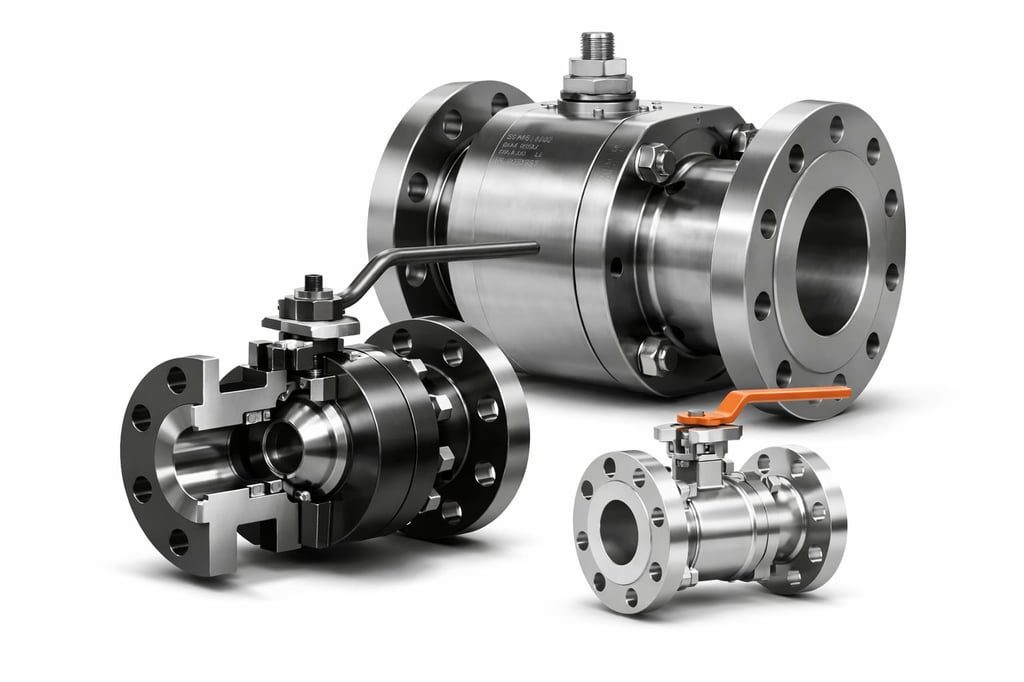
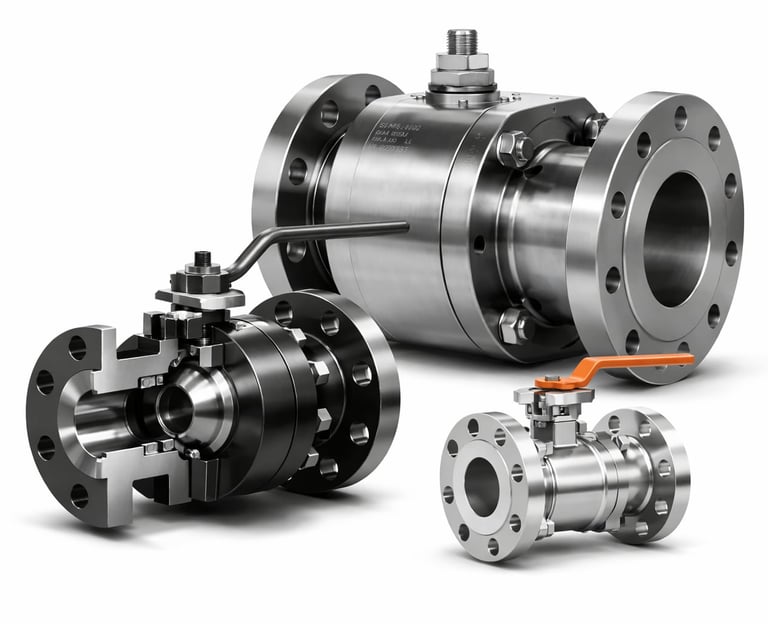
BRITVAL manufactures high-performance Floating Ball Valves designed for reliable shut-off and efficient flow control in industrial piping systems.
Floating Ball Valves
>
>
>
A floating ball valve is engineered with the ball connected to the stem at the top, while the bottom of the ball remains unsupported by a trunnion. This allows the ball to “float” slightly within the valve body. When pressure is applied, the ball is pushed downstream against the seat ring, creating a tight and effective seal.
Unlike trunnion-mounted designs, floating ball valves rely on line pressure to enhance sealing performance. This simple yet effective mechanism makes them a preferred choice for low- to medium-pressure applications across various industries.
Types of Floating Ball Valves:
Floating ball valves are available in various configurations to suit different industrial requirements. At BRITVAL, they can be customized by size, end connection, bore type, material, and actuation to ensure reliable performance and efficient flow control for your specific application.
Key Features:
The ball in these valves is not fixed but “floats” within the valve body. This allows the line pressure to push the ball against the downstream seat, creating a tight, leak-proof seal. This simple yet effective design ensures dependable shut-off even in fluctuating pressure conditions.
Floating Ball Mechanism
Bi-Directional Sealing
Space floating ball valves are designed to provide sealing in both flow directions. This makes them versatile for a wide range of piping systems, allowing installation without worrying about flow orientation.
Compact and Lightweight Design
The valve’s compact construction saves space and reduces weight, making it easy to install in tight areas or small pipelines without compromising performance.
Durable Construction
Built from high-quality materials, Space floating ball valves resist corrosion, wear, and high-pressure conditions, ensuring long-term reliability across industrial applications.
Quarter-Turn Operation
With a simple 90° turn, these valves can fully open or close, providing fast response and easy operation. This is particularly valuable in emergency shut-off systems or applications requiring frequent operation.
Easy Maintenance
Especially in 2-piece and 3-piece designs, the internal components can be accessed or replaced without removing the entire valve from the pipeline. This minimizes downtime and maintenance costs while extending the valve’s service life.

Structure and Components
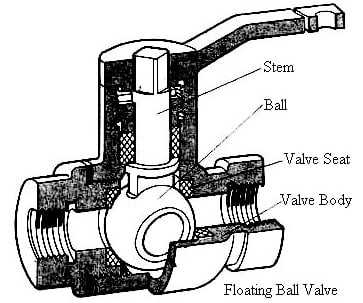
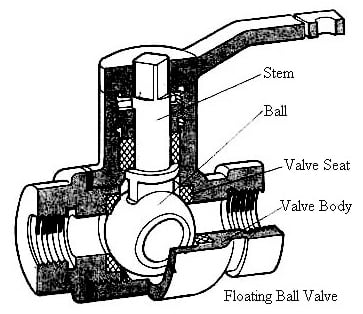
Floating ball valves have a structure similar to conventional ball valves, but with a few key differences. In these valves, the ball is free to float within the valve body rather than being fixed, while seat rings on both sides hold the ball in place and provide a tight, pressure-assisted seal.
Other main components include the valve body, which houses the ball and seats; the stem, which connects the ball to the actuator or handle for operation; and packing or gaskets, which prevent leakage around the stem and body. This design allows the valve to respond to line pressure, ensuring reliable sealing and efficient flow control.
Contact
Reach out for quotes or technical support
sales@britval.co.uk
+44 (0)24 7538 2433
© 2026. Britval Ltd.
+971 (6) 558 2741
PHONE
middleeast@britval.co.uk
BRITVAL delivers high-performance flow control solutions for oil & gas, petrochemical, power, water, and heavy industries worldwide.


YOUR BEST VALVE PARTNER